Our investments in practice

Our investments
We want our investments to help more capital flow towards communities to enable them to have control over their assets and resources whilst recognising that monetary return may not always be the primary measure of value. We are doing this by exploring how our capital can be deployed to demonstrate alternative financial models that support community ownership, stewardship and long term economic resilience.
In 2025, we commissioned Amir Rizwan to write a provocation paper to help us understand how our investments could operate more in line with our commitment to building power in communities. We want to better understand our stewardship responsibilities through the lens of justice.
Our approach to
stewardship
We have set up a working group made up of staff, trustees, and external partners to understand what it means in practise for Tudor’s capital to be invested in communities following a justice-led approach.
Through this group, we are exploring and designing alternative approaches to holding risks, stewardship, and accountability that enable communities to realise their goals, like our and asset capital grants.
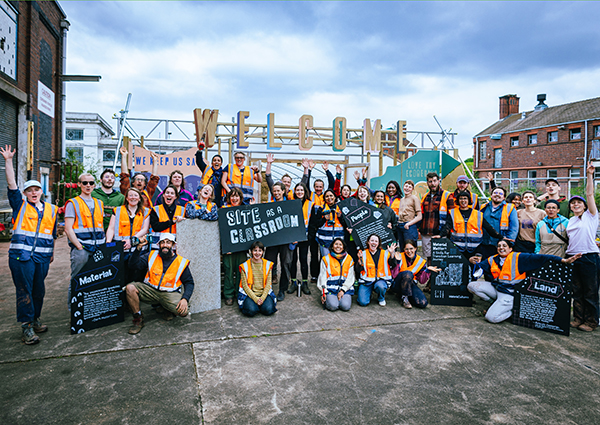
Courtesy of CIVIC SQUARE
Our endowment
Tudor’s endowment is currently valued at around £210m. Over the last fifteen years, Tudor has managed its endowment through investing the majority of its capital in an ESG screened public equities portfolio. This has supported our ability to meet grant-making commitments and maintain annual spending of up to £25m. In addition to public equities, a smaller proportion of our endowment is invested in impact investment, so that we can begin to create pathways to better aligning our endowment to our goals.
Tudor has for many years spent portions of its capital alongside a return on investments. This approach is inevitably a slow spend down trajectory as the value of our endowment depletes in real terms. In 2026, we have committed to applying our learning to date on a longer term strategy that will determine our stewardship approach and how, under our transformation, we shape the future of Tudor and its existence.